

Start with a specific visitor question
Adult website SEO is more useful when it describes an actual business and its services than when it repeats broad adult-related phrases. Decide whether a page helps someone understand a venue, compare an offering, find a location, or make an enquiry. Use language that matches that purpose. A main service page and a practical FAQ should not contain the same paragraphs under slightly different headings. Give each page a reason to exist before choosing a target phrase.
Use location information where it helps
For a local business, the hero can establish the area and service, while a location section can explain genuine access information. Service descriptions should explain the service itself rather than repeatedly naming the district. Include an address only when it is accurate and appropriate to publish. Do not create many near-identical city pages for locations the business does not serve. Useful directions, confirmed operating information, and real customer questions provide more substance than a list of place-name variations.
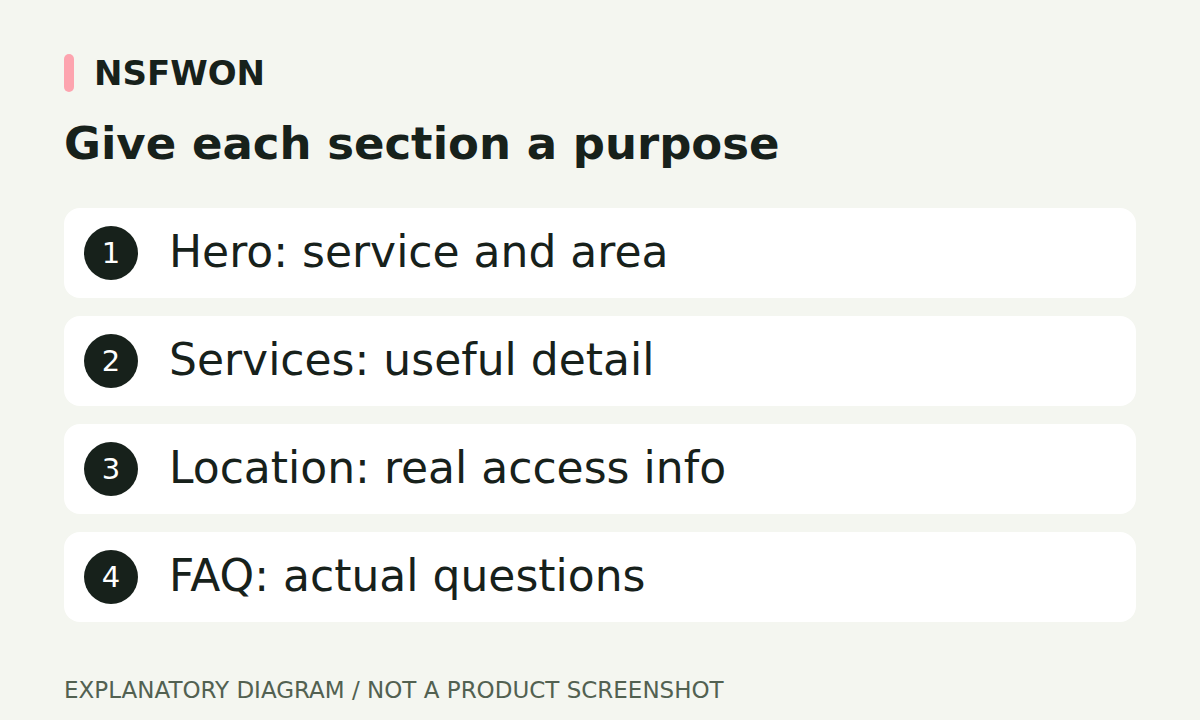
Illustration: Give each section a purpose. This diagram explains the workflow; it is not a product screenshot.
Describe the page accurately in metadata
Give each public page a distinct title and description in NSFWON’s search and sharing settings. A service-and-brand title can be clear without using every possible synonym. Use an appropriate sharing image and confirm that the canonical and OG URL identify the intended public page. Avoid unsupported superlatives and promises of guaranteed rankings. Google’s title and snippet guidance favors helpful descriptions; adding more repeated phrases does not make the page more useful to a visitor.
Keep structured data factual
Structured data should represent supported information that agrees with the website. Use real names, URLs, contact information, and locations where applicable. Do not publish invented ratings, customer counts, coordinates, or opening hours as machine-readable facts. Sample content used while designing a page should not be mistaken for a verified business record. If a fact is not known, leaving it out is better than creating a plausible value to make a schema object look complete.
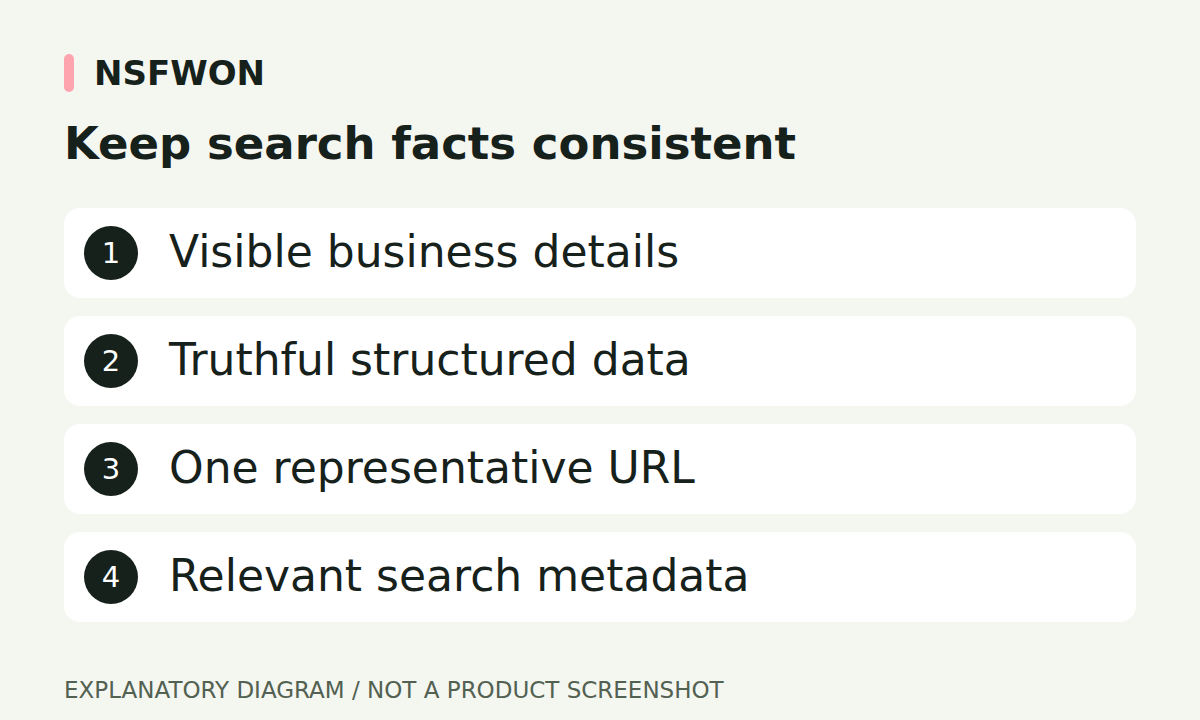
Illustration: Keep search facts consistent. This diagram explains the workflow; it is not a product screenshot.
Understand explicit-content search handling
Google has separate guidance for sites that contain explicit content, including how SafeSearch can affect visibility. Classification depends on the content and search systems, not simply the chosen brand name. Review that guidance when it applies to the actual material you publish. Do not promise that metadata or a particular domain will bypass filtering. Keep neutral business information genuinely neutral, and treat search presentation as something to check rather than an outcome an AI website builder can guarantee.
Review the website as well as its search fields
Check mobile readability, original service explanations, useful image descriptions, working contact actions, and links between relevant pages. Keep the sitemap limited to genuine public pages and avoid mixing private editor URLs into it. An initial SEO setup is not the end of maintenance: update pages when the business changes, correct broken destinations, and remove unsupported claims. Use NSFWON to keep the page and its metadata aligned, while judging success by relevant visits and real enquiries rather than keyword repetition.
Continue with NSFWON
Open NSFWON, review the current plans, or contact support. Read the related guide: How to Build an AI Website with NSFWON.